TERROR XI STORM • Attachment Guide
CHOOSE THE RIGHT MINI EXCAVATOR ATTACHMENT.
The right attachment changes what a compact excavator can accomplish. Explore this complete TYPHON TERROR XI STORM attachment guide to understand what each tool does, where it works best, and how to build a setup around your job.
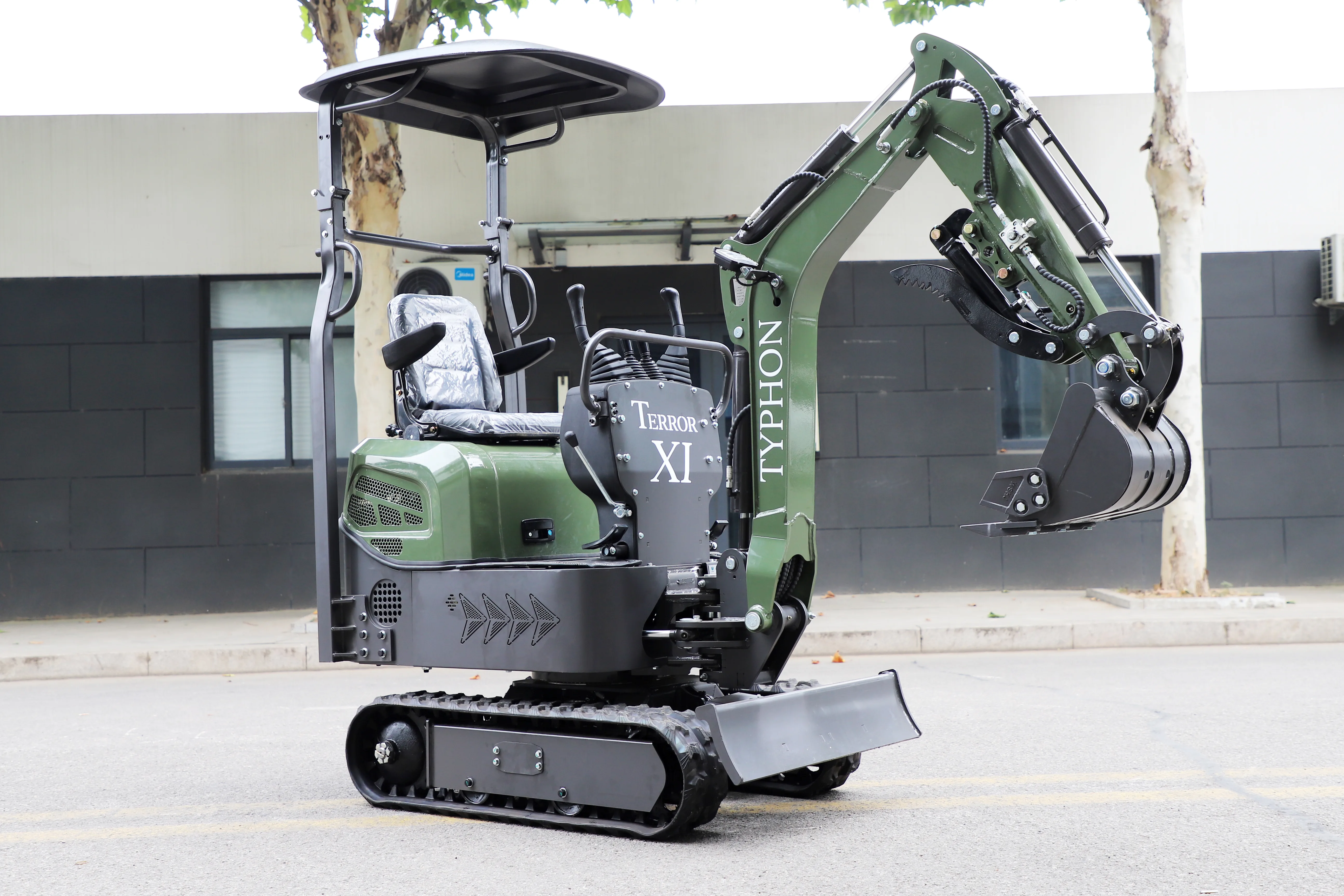
TERROR XI STORM • APPROX. 2,425 LB MACHINE CLASS
Before Choosing
START WITH THE JOB. THEN CHOOSE THE TOOL.
The best mini excavator attachment depends on the material, the result you need, available working space and the sequence of tasks required to complete the job.
What Material?
Start by identifying the material the attachment needs to work with.
What Job?
Choose the working action that matches what needs to happen.
What Access?
Narrow trenches and compact property work may benefit from more focused attachments instead of wider general-purpose tools.
One Tool Or Many?
A mixed job may require several attachment changes rather than relying on one tool from start to finish.
Quick Attachment Selector
FIND THE TOOL BY THE JOB.
01 / Precision Excavation
7.9 IN NARROW BUCKET FOR FOCUSED DIGGING.
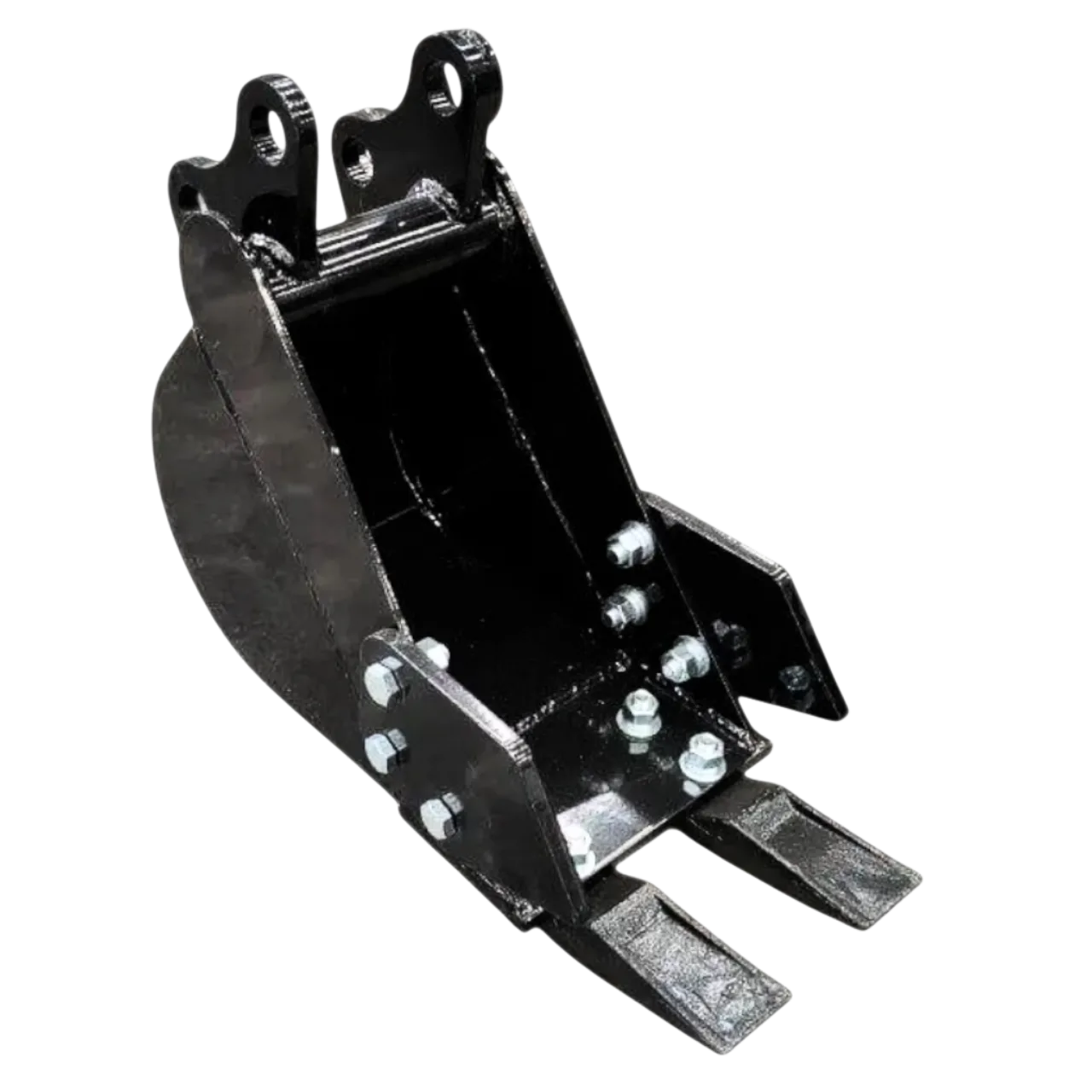
The 7.9 in (200 mm) Narrow Bucket is designed for excavation where controlling trench width matters. Compared with a wider bucket, it removes a narrower path of material.
Useful where the trench should remain focused instead of removing a broad section of soil.
A narrower excavation can reduce the amount of material that must be moved and replaced.
A natural match for property and landscaping jobs where access and ground disturbance matter.
You need broad excavation, backfilling, grading or higher-volume loose-material handling.
02 / General Earthwork
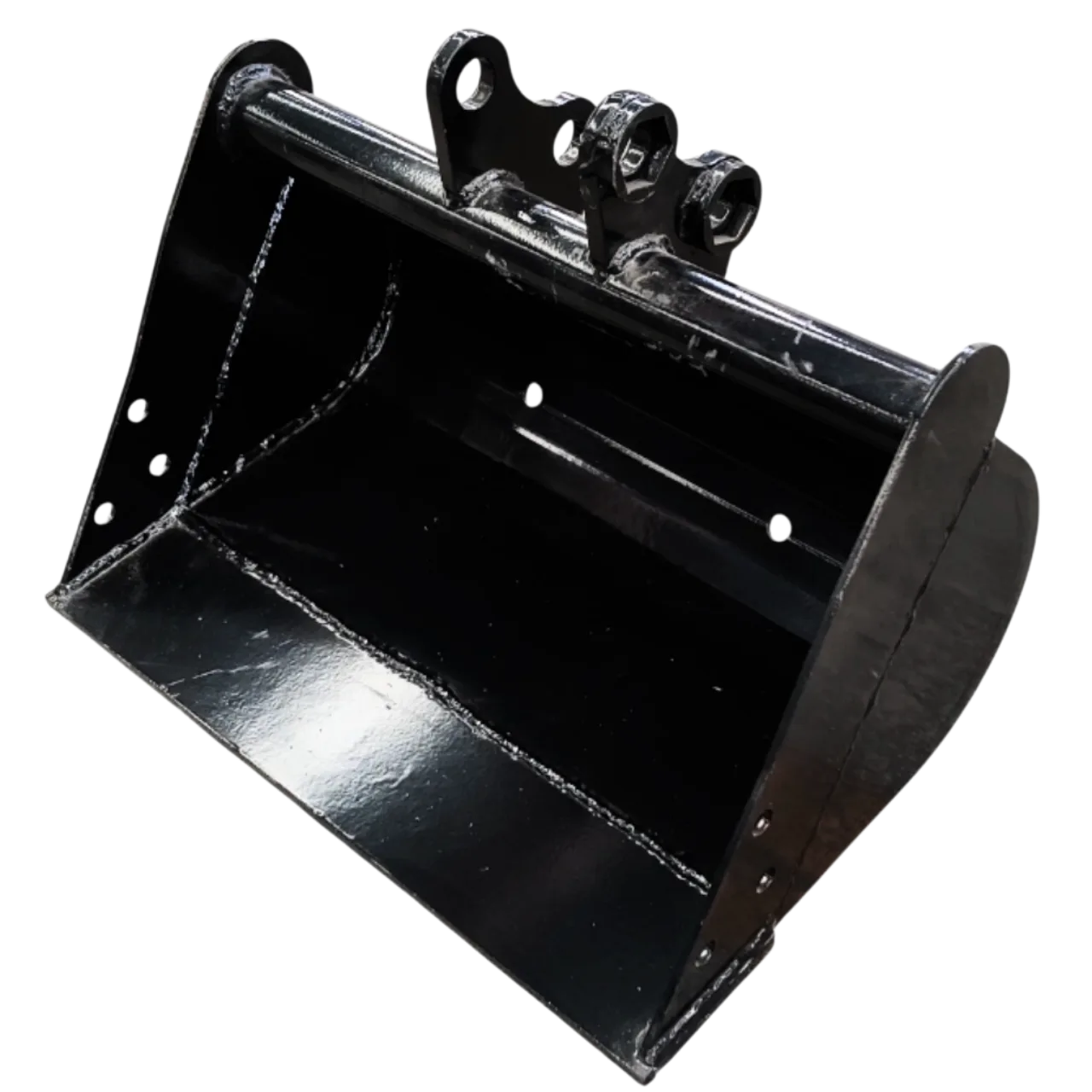
19.7 IN PLAIN BUCKET FOR EVERYDAY EARTHWORK.
The 19.7 in (500 mm) Plain Bucket provides a broader working width for general digging, loose-soil handling, backfilling and cleanup.
Covers a broader area per pass than the narrow trench bucket.
Useful when the work does not require a highly specialized attachment.
Helps return and redistribute soil after excavation work is complete.
Narrow bucket = focused trenching. Plain bucket = broader digging and cleanup.
03 / Material Separation
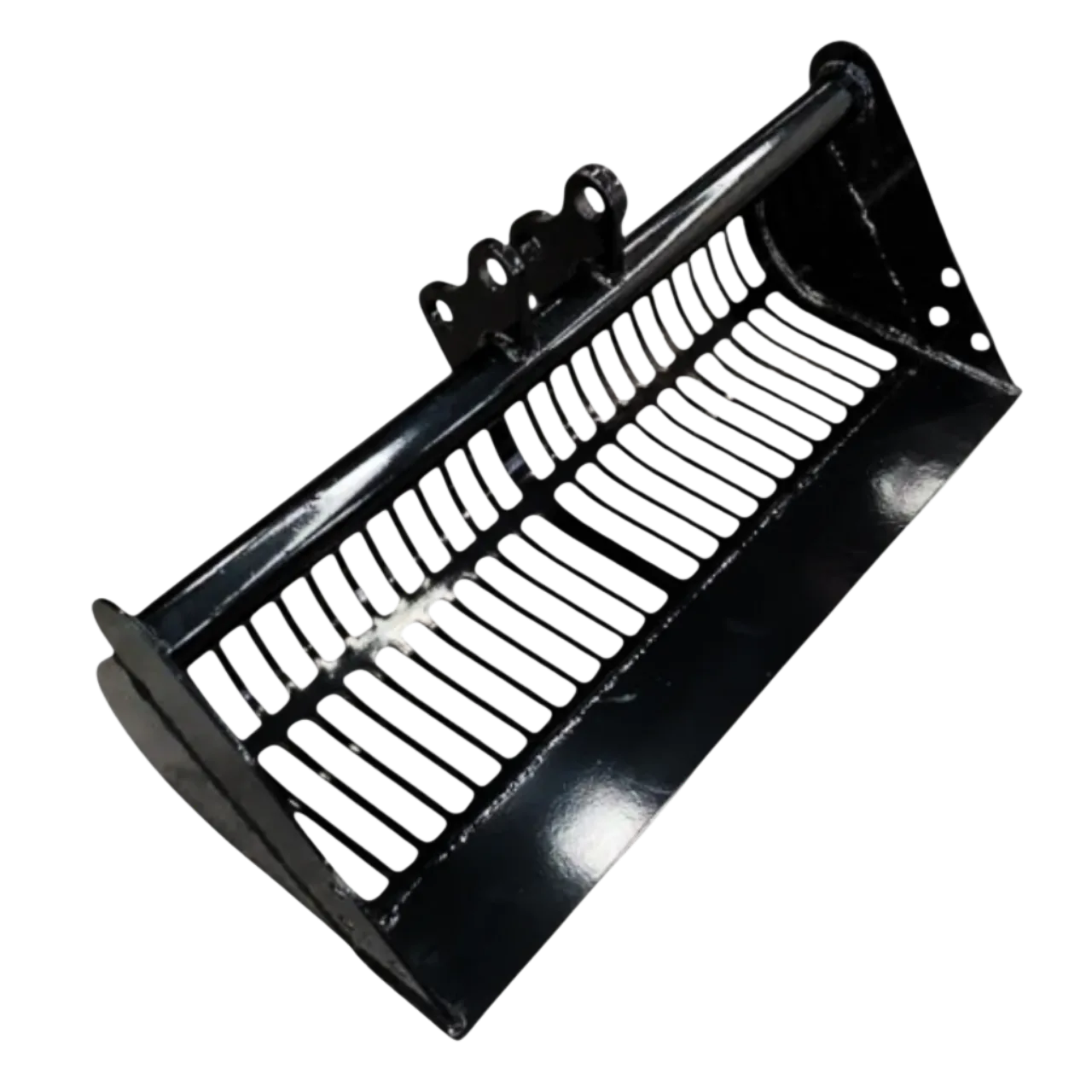
SCREEN SOIL. SEPARATE DEBRIS.
The 23.6 in (600 mm) Screening Bucket is designed to separate smaller material from larger rocks, roots and debris during material handling.
Screen mixed material directly at the work area instead of moving everything to a separate sorting point.
Helps separate reusable soil from larger unwanted material.
Useful after digging when the removed material contains stones, roots or debris.
Dig → Screen → Separate → Reuse
04 / Grading & Finishing
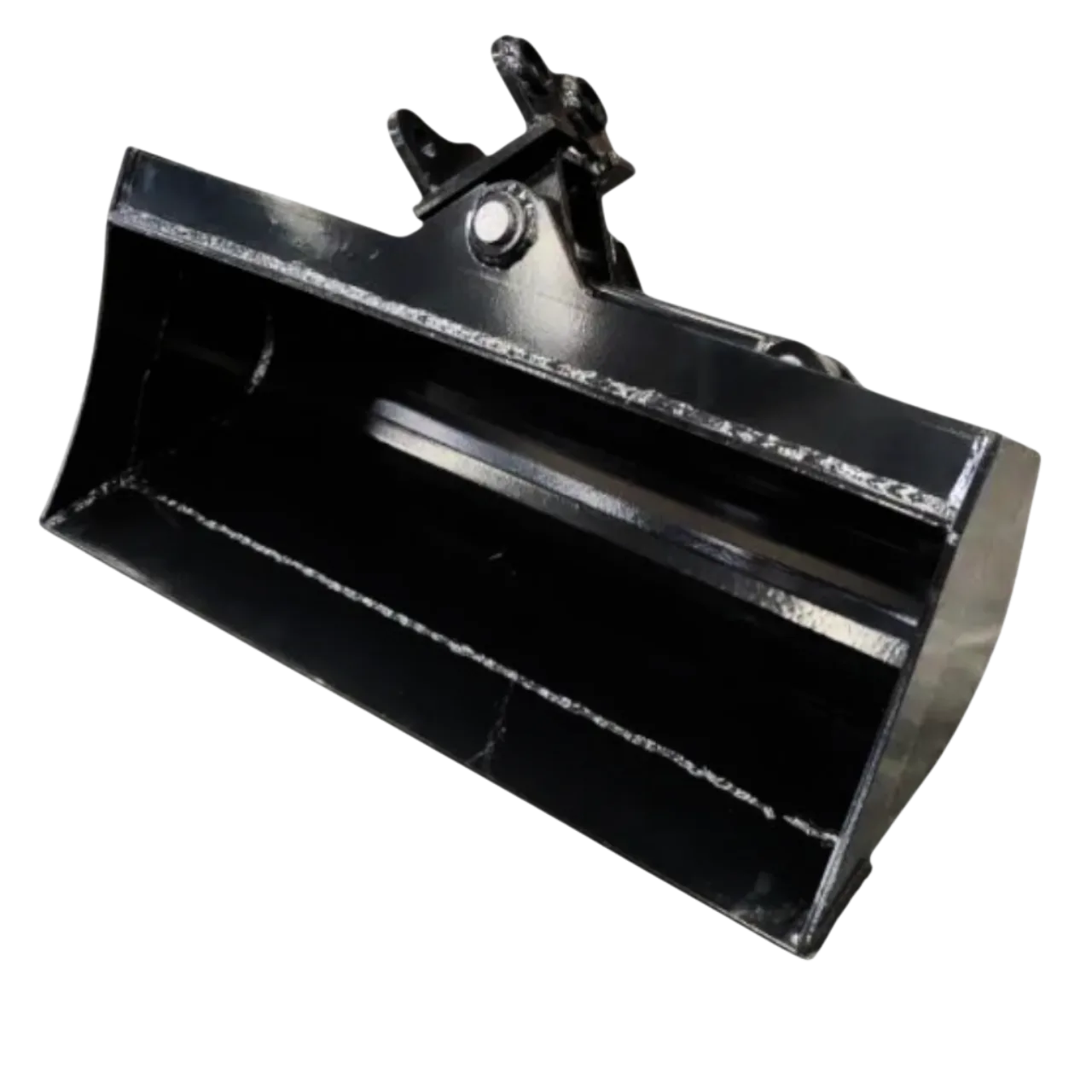
CONTROL THE ANGLE. SHAPE THE SURFACE.
The 23.6 in (600 mm) Tilting Bucket is useful when the bucket edge needs to follow a slope, ditch profile or changing surface angle.
Useful where the work surface is not level or square to the machine.
Adds more positioning flexibility for shaping and final surface work.
Complements the TERROR XI STORM boom-swing capability for work around edges and irregular surfaces.
05 / Ground Drilling
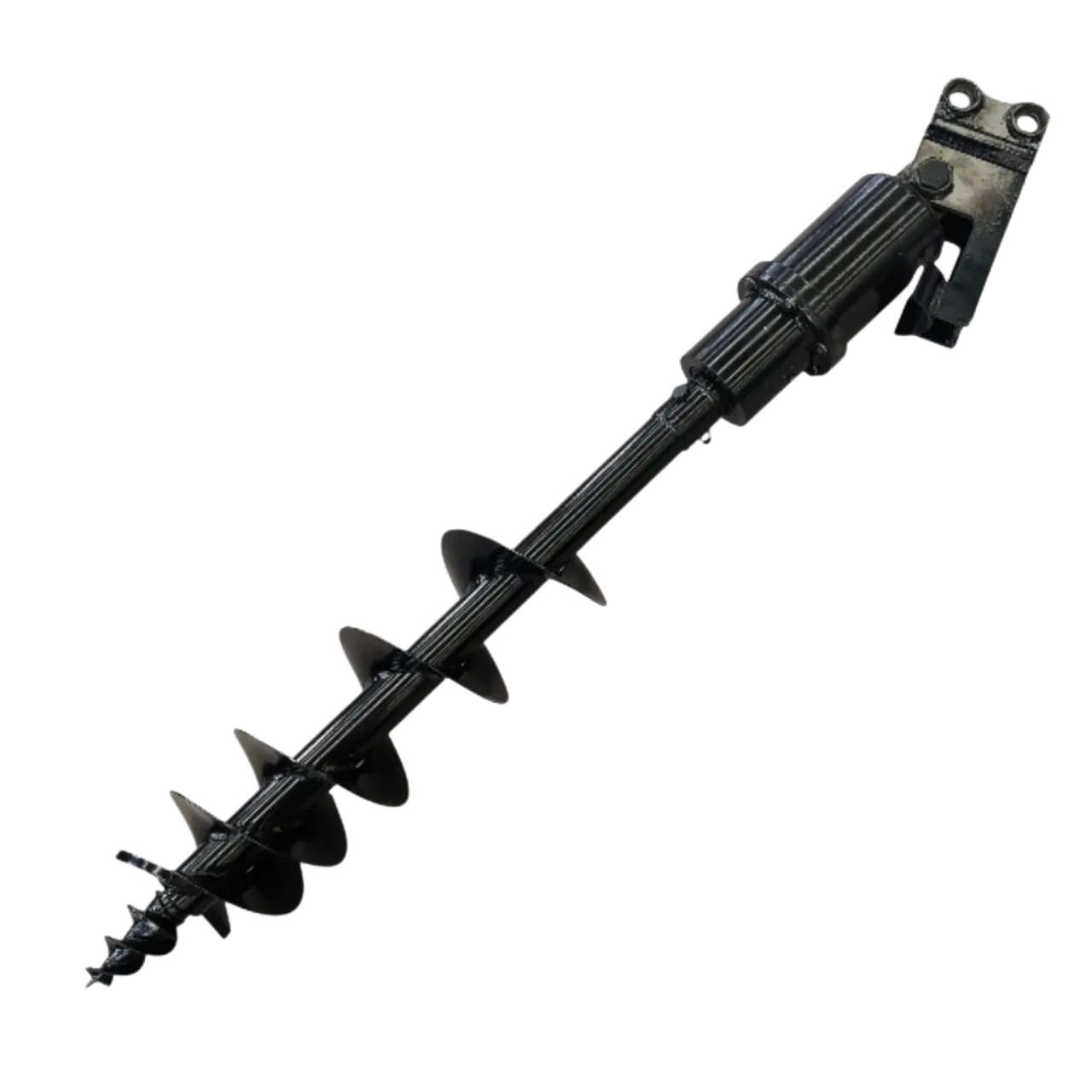
TURN THE TERROR XI INTO A DRILLING MACHINE.
An auger changes the working action from bucket excavation to focused vertical drilling, making it useful for repeated holes around property, landscape and farm projects.
Useful where multiple similar openings need to be prepared across a property.
Creates a more focused vertical opening instead of excavating a wider area.
Drill first, then switch back to a bucket or another attachment for the next stage.
Position → Drill → Move → Repeat
06 / Grab & Handle
CONTROL MATERIAL A BUCKET CAN'T HOLD.
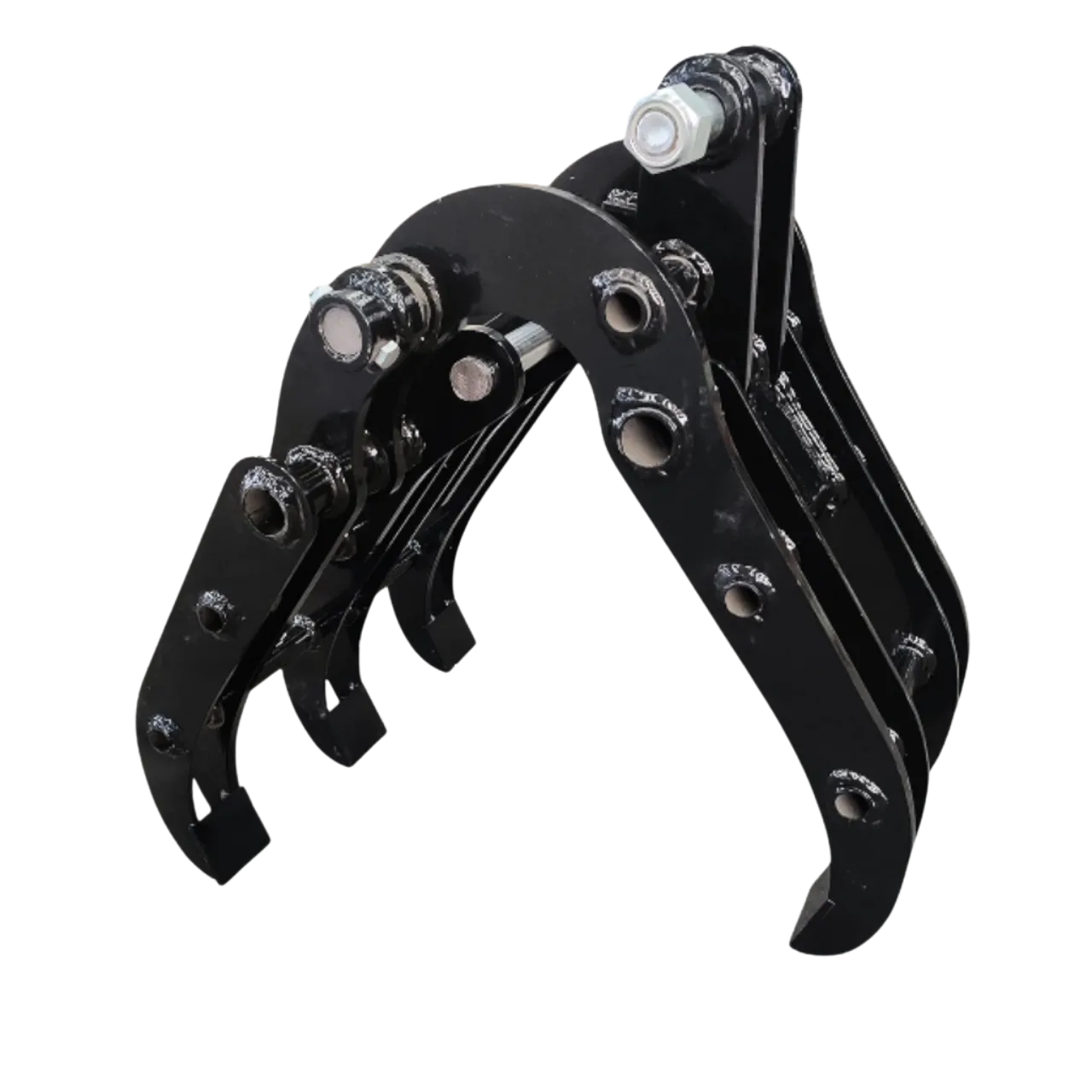
A Grapple gives the TERROR XI STORM another way to control irregular materials such as brush, logs, rocks, roots and site debris.
Useful where material needs to be held and controlled rather than simply scooped.
Helps reposition brush, branches and irregular loose materials.
Useful for certain rocks, roots and irregular landscaping material.
Bucket = scoop loose material. Grapple = hold irregular objects.
07 / Attachment Workflow
THE TOOL THAT CONNECTS THE OTHER TOOLS.
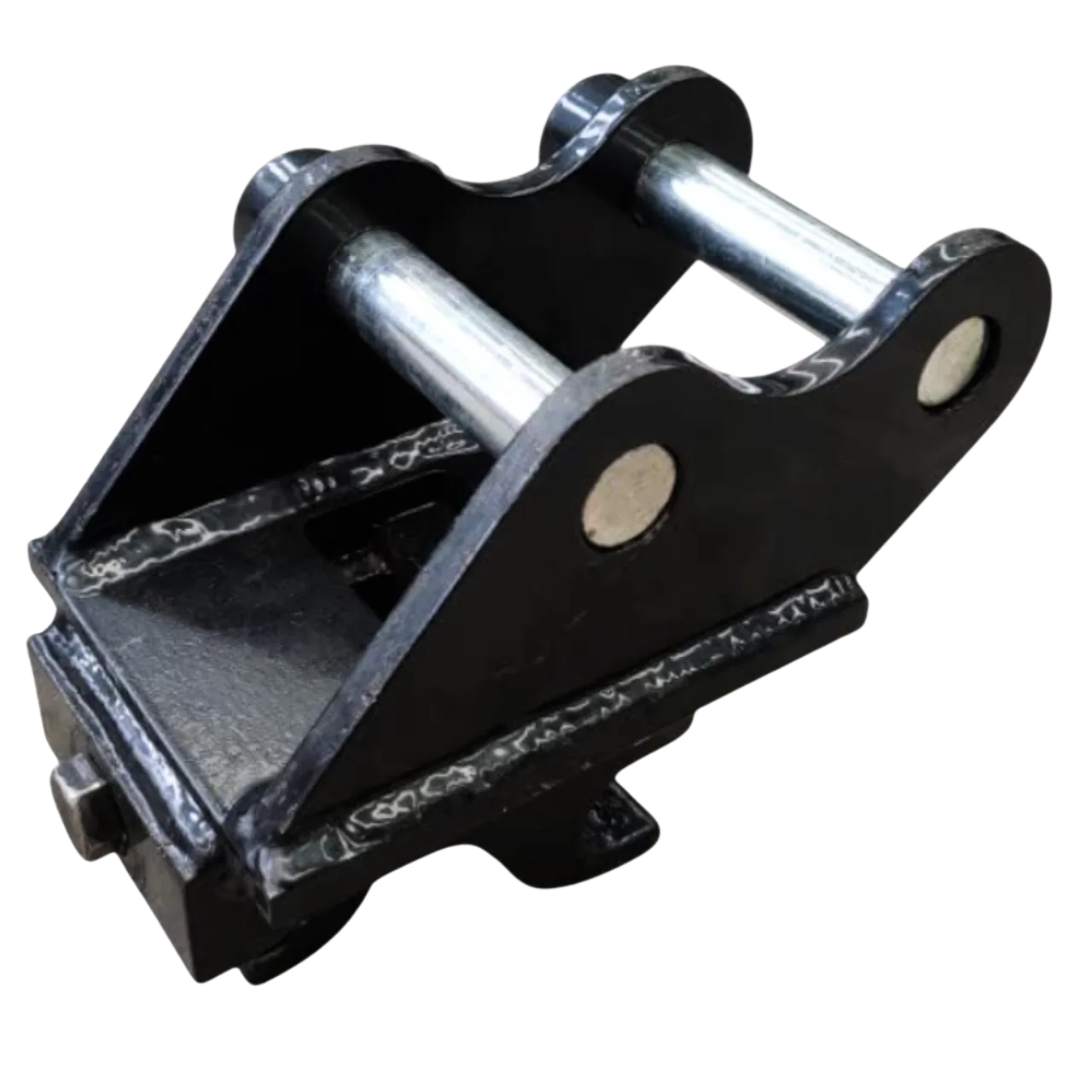
The Quick Coupler is different from the other tools in this guide. Its main purpose is supporting a workflow where the excavator moves between multiple compatible attachments.
One project may need a bucket, auger, grapple, rake and ripper at different stages.
Useful when attachment changes are a normal part of the work sequence.
Becomes increasingly useful as the number of compatible attachments grows.
08 / Demolition
BREAK FIRST. EXCAVATE SECOND.
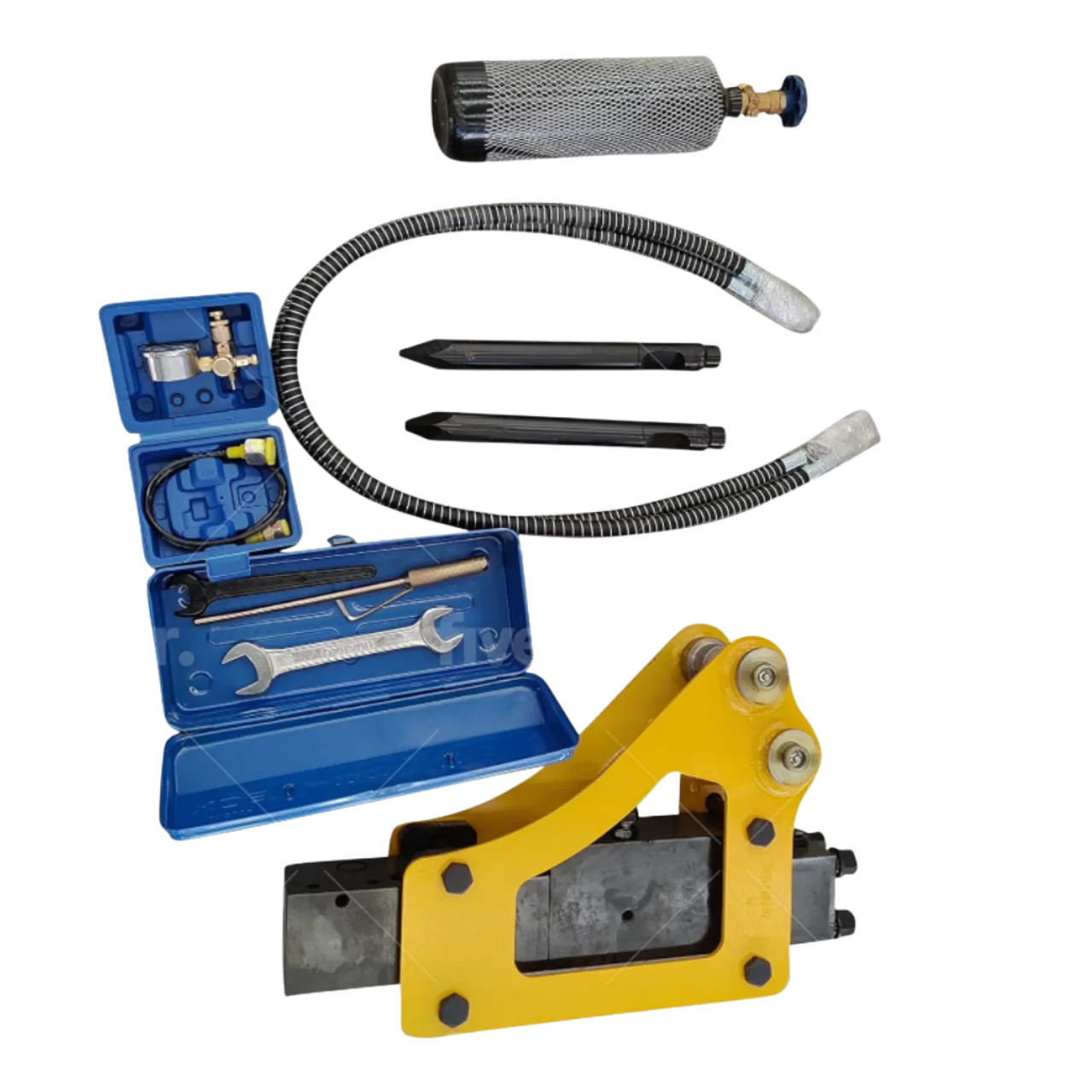
A compatible Hydraulic Break Hammer extends the TERROR XI STORM into harder-surface and demolition work where digging may not be the correct first step.
Fracture the hard material into more manageable sections.
Move from the breaker to an appropriate digging or cleanup attachment.
Excavate and clear the loosened material.
Confirm mounting and hydraulic requirements before installing or operating a breaker.
09 / Material Handling
ADD ANOTHER KIND OF MATERIAL MOVEMENT.
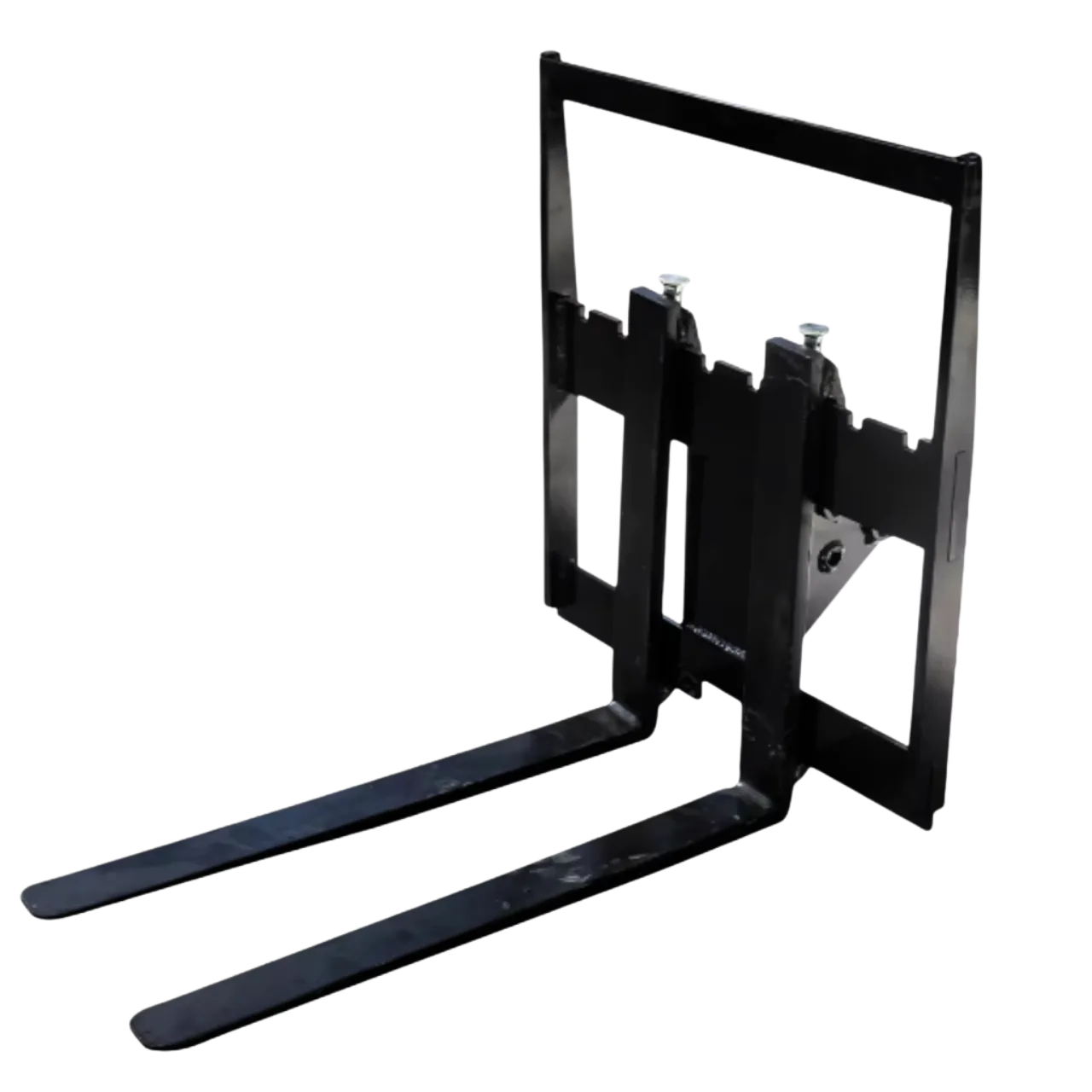
The Pallet Fork expands the TERROR XI beyond excavation by supporting compatible material-handling tasks within approved machine and attachment limits.
Adds another type of material-handling capability to the compact excavator.
Useful where material needs to be repositioned within smaller job areas.
Never assume lifting capacity from machine weight alone. Load weight, balance, attachment position and machine stability must remain within approved limits.
10 / Landscaping & Cleanup
CLEAR THE SITE. PREPARE THE SURFACE.
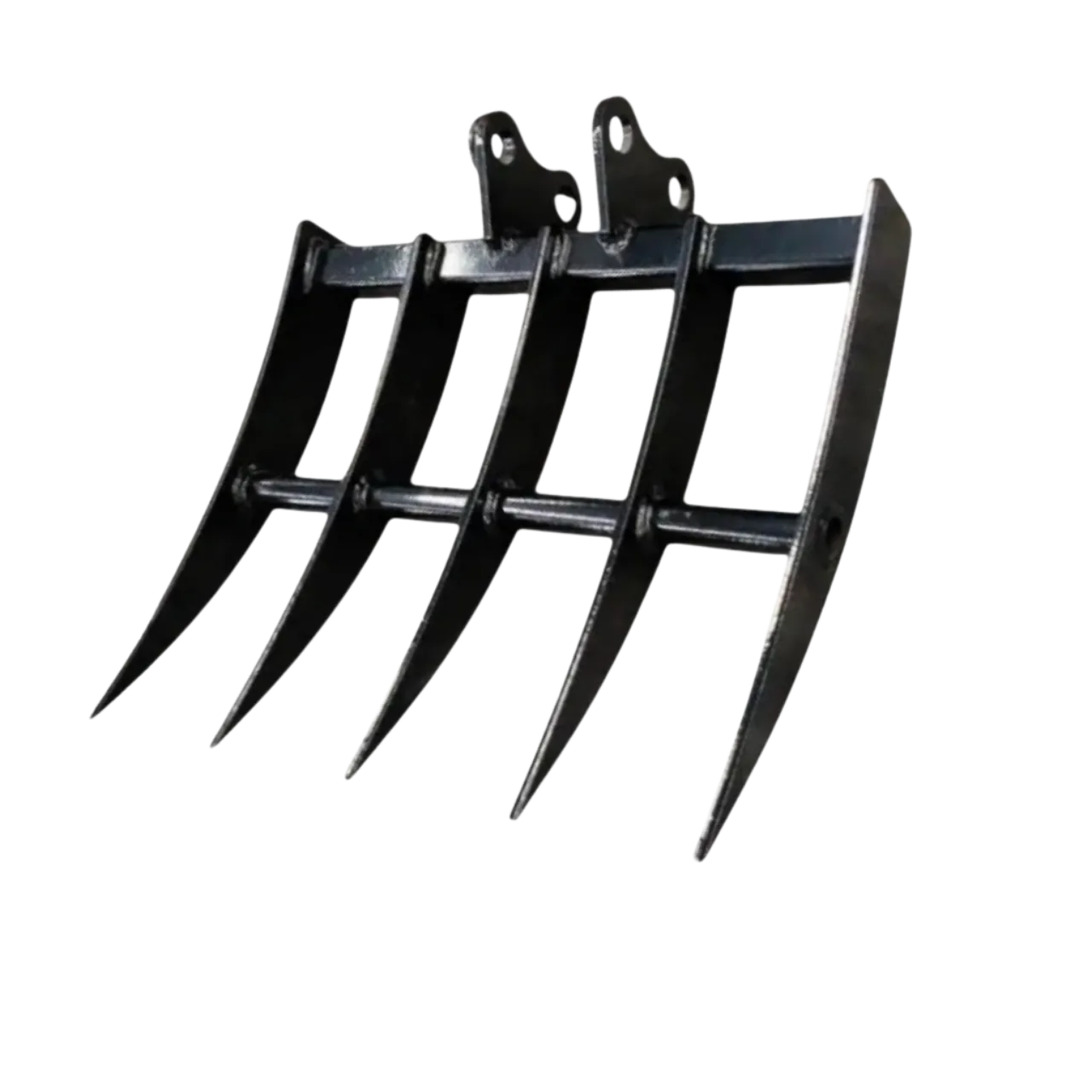
A Rake uses an open working edge to pull through surface material, making it useful for cleanup and preparation where a closed bucket may not be the ideal tool.
Helps gather larger material while allowing some loose soil to remain.
Useful after excavation and before final surface finishing.
Helps organize roots, brush and larger loose debris.
Dig → Clear → Rake → Grade
11 / Hard-Ground Preparation
LOOSEN DIFFICULT GROUND BEFORE EXCAVATION.
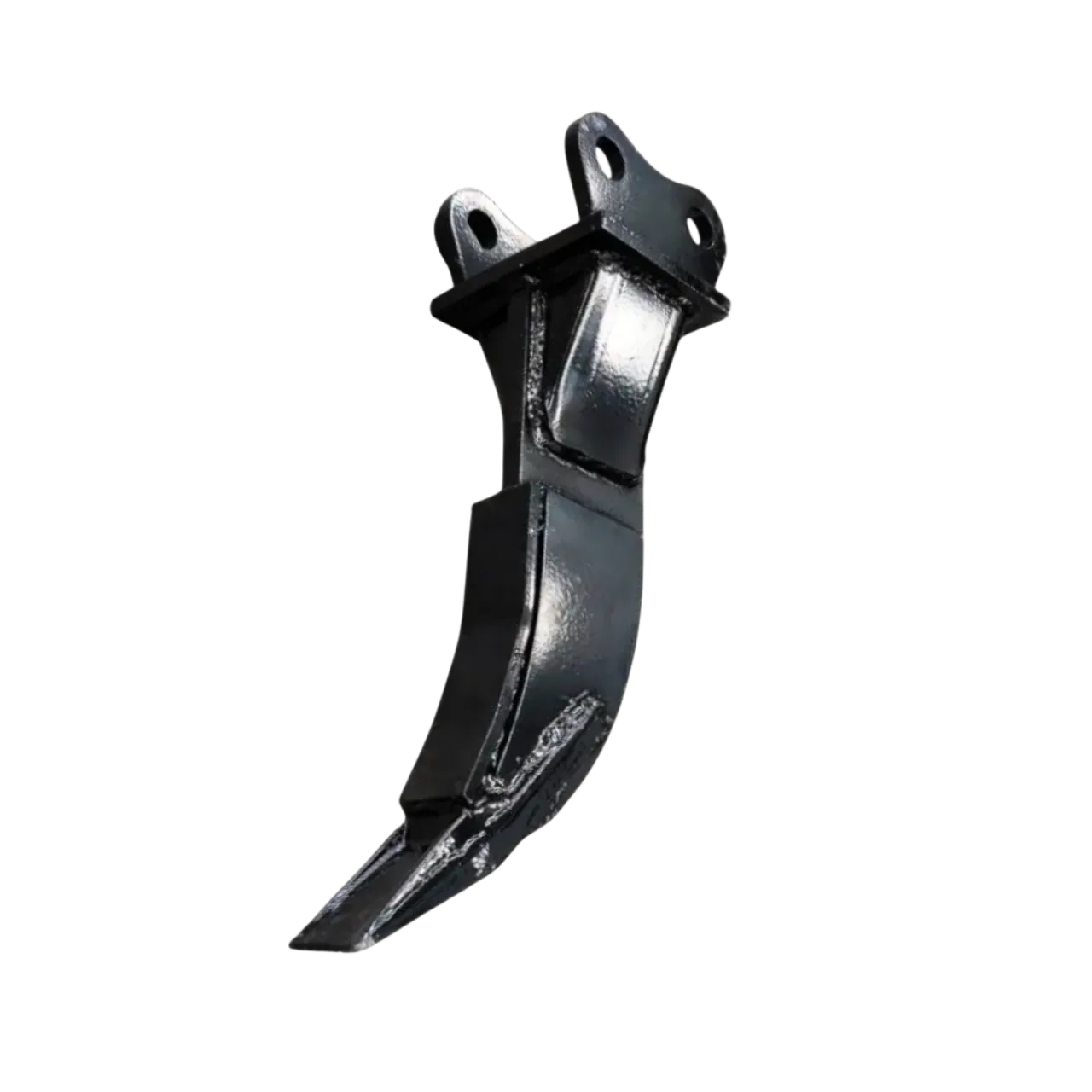
The Ripper uses a concentrated tooth instead of a full bucket edge, making it useful for loosening compacted or rooted material before excavation.
Works into difficult material through a narrow point rather than a broad edge.
Loosen difficult ground before broader excavation begins.
Often works best as the first stage before switching to a digging bucket.
Rip → Loosen → Change → Dig
Attachment Workflow Guide
DON'T THINK ABOUT ONE TOOL. THINK ABOUT THE WORKFLOW.
Many jobs are completed more efficiently by moving through several attachment types in a logical sequence.
Trench Workflow
Loosen → Trench → Backfill
Landscape Workflow
Clear → Prepare → Finish
Fence Workflow
Drill → Adjust → Clean
Break Workflow
Break → Change → Remove
Soil Workflow
Loosen → Screen → Prepare
Attachment Comparison
WHICH ATTACHMENT SHOULD YOU CHOOSE?
Package Guide
ONE ATTACHMENT OR COMPLETE PACKAGE?
Individual Attachment
Choose one attachment when you already know the exact type of work you expect the machine to perform repeatedly.
View Attachments →5 Attachment Package
A focused package for operators who want broader capability without carrying the full attachment collection.
View 5 Package →11 Attachment Package
A broader setup for operators who expect their TERROR XI STORM to move between digging, drilling, grading, demolition, material handling and cleanup work.
View 11 Package →Compatibility Guide
CHECK COMPATIBILITY BEFORE YOU CONNECT.
An attachment that looks similar is not automatically compatible. Verify the connection, hydraulic requirements, attachment weight and operating limits before use.
Coupler Fitment
Verify the mounting and connection dimensions for the specific attachment and machine.
Hydraulic Requirements
Powered attachments may require specific hydraulic characteristics. Confirm them before installation.
Attachment Weight
Heavier attachments can affect machine balance, handling and operating characteristics.
Operating Limits
Follow the machine and attachment manufacturer's instructions for installation, operation and maintenance.
Attachment Care
KEEP EACH TOOL READY FOR WORK.
Inspect
- Inspect pins and connection points
- Check visible wear
- Inspect hydraulic hoses where applicable
- Confirm the attachment is secured
- Inspect the work area
Operate
- Stay within approved operating limits
- Avoid improper side loading
- Watch attachment positioning
- Monitor visible hoses and fittings
- Stop if abnormal movement appears
Maintain
- Remove built-up soil and debris
- Inspect working edges and teeth
- Check hydraulic connections
- Store attachments securely
- Follow maintenance instructions
Attachment FAQ
MINI EXCAVATOR ATTACHMENT QUESTIONS.
ONE MACHINE. CHOOSE THE TOOLS THAT MATCH YOUR WORK.
Use this guide to identify the attachment that matches your job, compare available options or build a broader TERROR XI STORM attachment package.